
[中文版本]
On May 10, 2026, a grand commemoration of the Golden Spike Festival was held in Utah. People from all walks of life gathered at the site to honor the history of the construction of the transcontinental railroad across North America, pay tribute to the Chinese laborers who journeyed far from home and devoted themselves to building the railway, and revisit the enduring contributions made by early Chinese immigrants to the development of the American West.
At the event, Dr. Christopher W. Merritt of the Utah State Historic Preservation Office delivered a keynote speech. As a registered professional archaeologist and State Historic Preservation Officer, he has spent many years researching local history and possesses deep expertise in the history of railroad construction and development. In his speech, he solemnly recalled that the railroad stretched more than 2,000 miles across the continent, traversing extremely complex terrain and harsh environments under exceptionally difficult construction conditions. The most challenging and arduous core sections of the entire line were all built by Chinese laborers who had traveled overseas to undertake the work.
Dr. Merritt pointed out that California had only recently been incorporated into the United States at the time, and the nation was still in the early stages of development and reconstruction. More than 20,000 Chinese immigrants left their homes and traveled across the Pacific to North America to take part in the monumental task of railroad construction. The years spent building the railway were harsh and brutal. Extreme cold and heat, treacherous mountains, grueling labor, and terrible working conditions exacted a heavy toll on the workers. During the short construction period alone, more than 3,000 Chinese laborers lost their lives, forever resting in a foreign land.
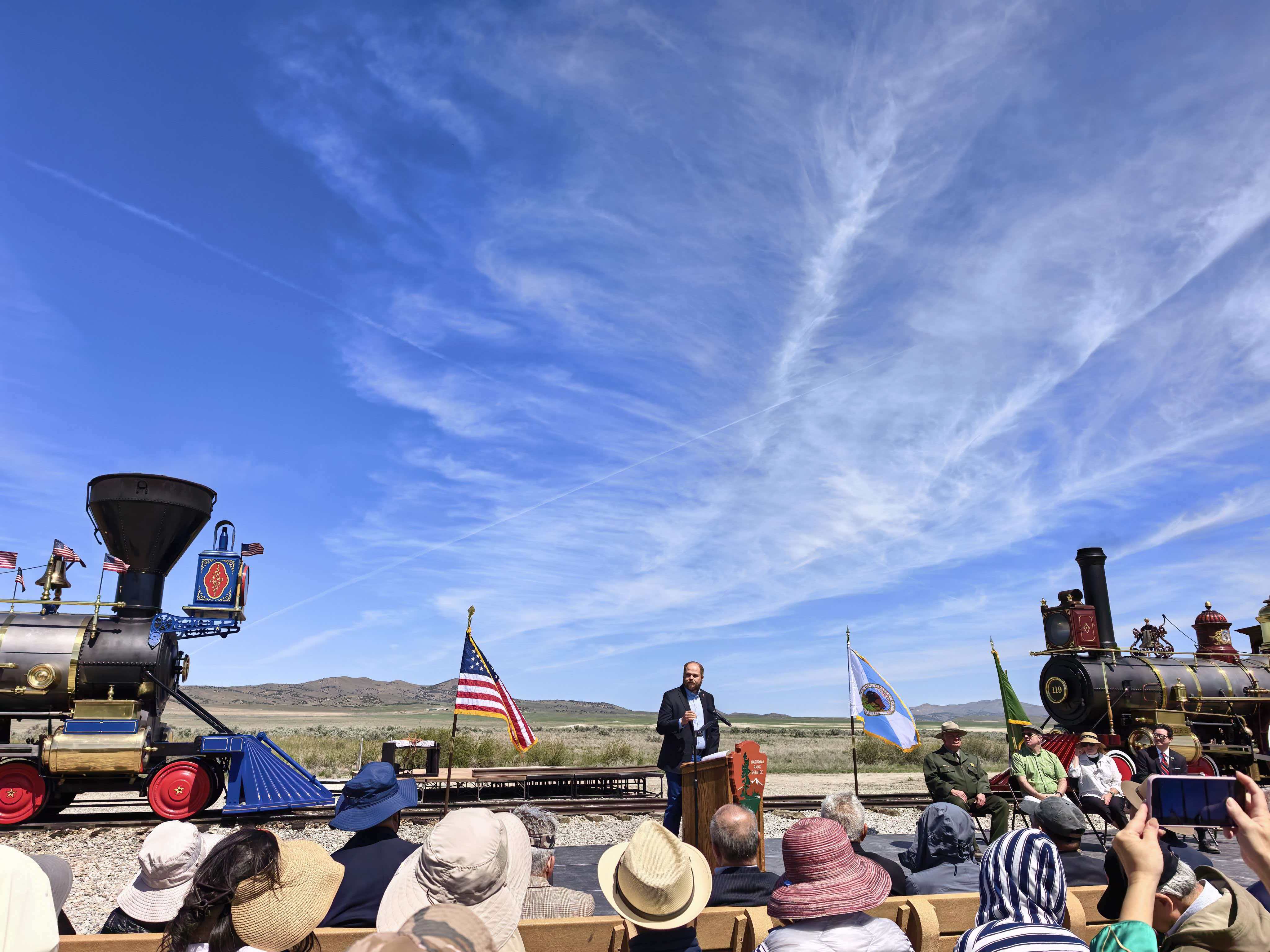
Merritt delivered a speech at the event.
Dr. Merritt highly praised the indelible historical contributions of the Chinese railroad workers. He stated that it was through the tireless efforts, perseverance, and determination of these laborers that the transcontinental railroad was successfully completed. The railway not only became a glorious chapter in the development of the modern American economy, but also served as a vital link that propelled the rise of the American West, greatly promoting trade, industrial growth, and regional prosperity. This world-renowned achievement was deeply marked by the sweat and sacrifice of Chinese workers, and history will never forget these ordinary yet great builders.
At this commemorative event, Professor Wu Xinxiong, director of the Guangdong Overseas Chinese Leaders Cultural Exchange Center and a native of Taishan in Guangdong Province—the ancestral home of many Chinese railroad workers—became one of the focal points of the gathering. At the sincere invitation of the organizers, Professor Wu delivered his speech entirely in authentic Taishanese. The familiar hometown dialect echoed throughout the venue.
During the event, when asked by media reporters, Professor Wu Xinxiong candidly shared his heartfelt intention: he chose to deliver his speech in the Taishan dialect simply to honor the memory of the ancestors and express mourning from afar. Back then, most of the Chinese laborers who traveled to North America to build the railroads were natives of Taishan. The Taishan dialect was the most familiar sound of home to these forebears. Remembering the past in their hometown tongue was the most sincere tribute that could be offered across mountains and seas. If the heroic Chinese workers buried beneath the railroad ties of the western railways could know of this, hearing Professor Wu’s warm hometown accent at the commemorative event nearly 160 years later would surely bring them comfort in the afterlife.
Professor Wu has devoted more than twenty years to the study and promotion of overseas Chinese culture. The Guangdong Overseas Chinese Leaders Cultural Center serves not only as a platform for cultural exchange, but also as a bridge connecting the 60 million overseas Chinese around the world with their ancestral homeland. Through his work, Professor Wu has deeply realized that only by understanding and caring for overseas Chinese communities can people better unite overseas Chinese hearts, inspire their wisdom, and harness their strength.
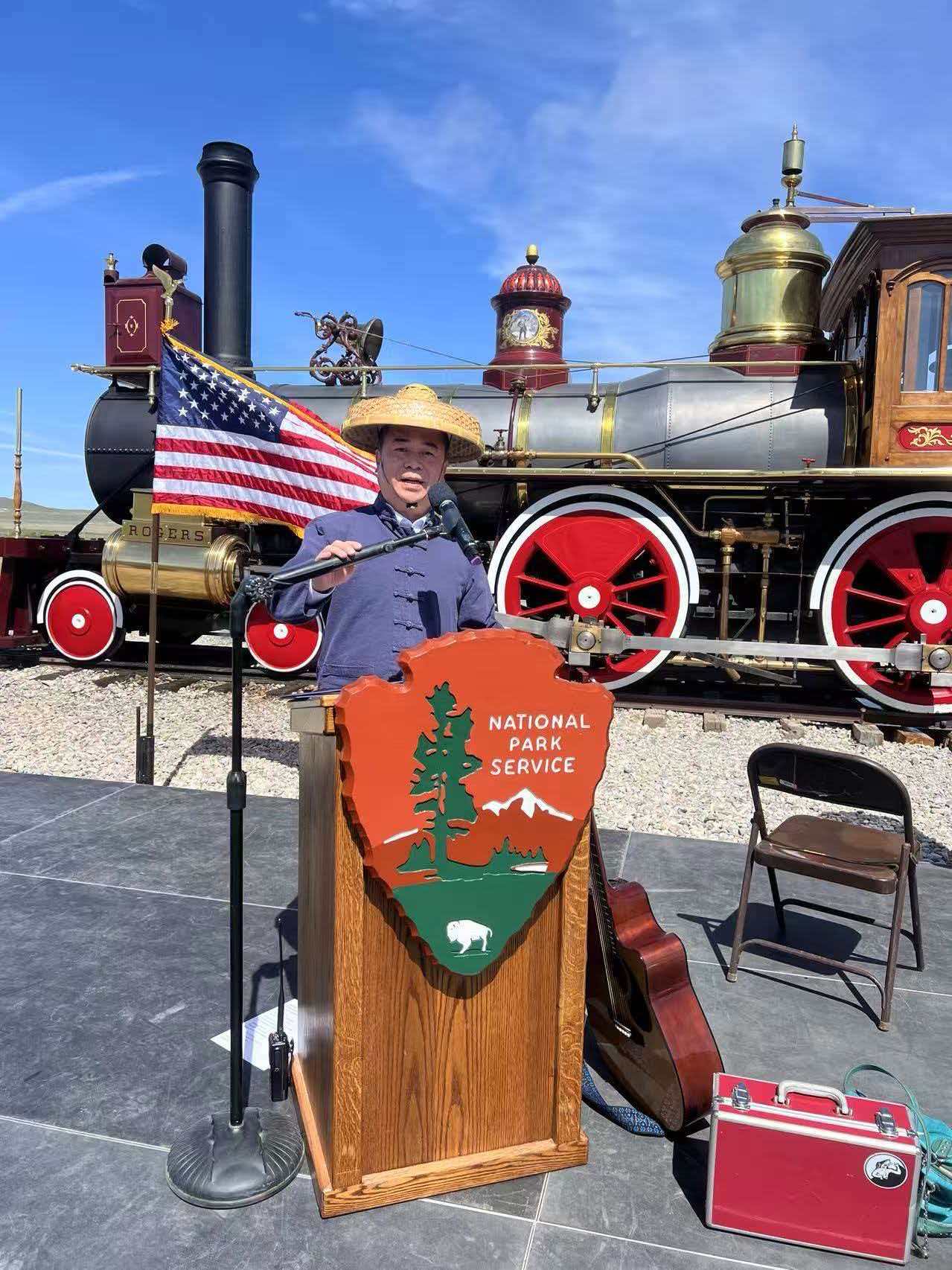
Professor Wu Xinxiong, Director of the Guangdong Overseas Chinese Leaders Cultural Exchange Center, delivered a speech in Taishan dialect at the event venue.
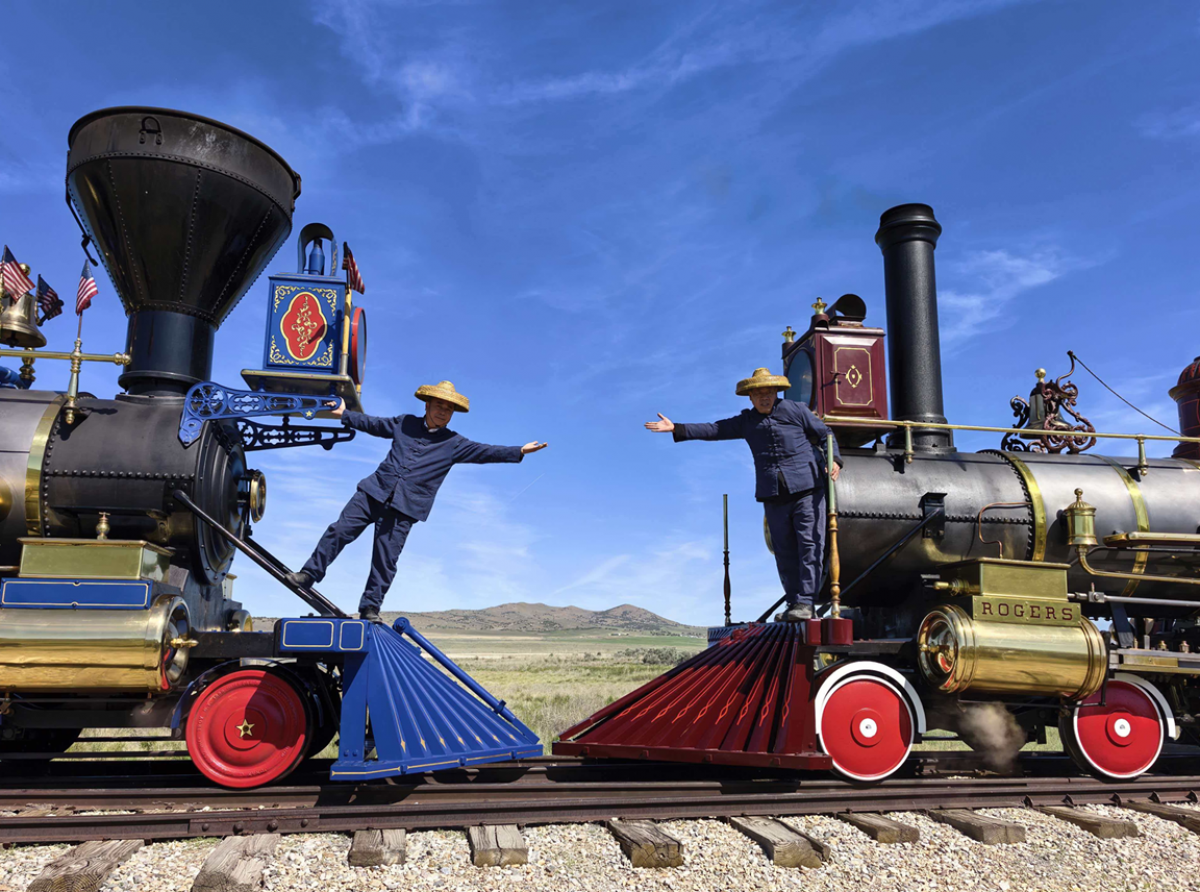
In order to faithfully recreate historical reality and pass on the spirit of the ancestors, Professor Wu, following the event arrangements, dressed in traditional attire once worn by Chinese railroad laborers and reenacted scenes of their arduous work on site. His vivid performance brought to life the determination, diligence, and resilience of the early laborers who faced hardships without fear, allowing attendees to directly experience the tremendous difficulties of railroad construction in those years. Waves of applause frequently broke out throughout the event.
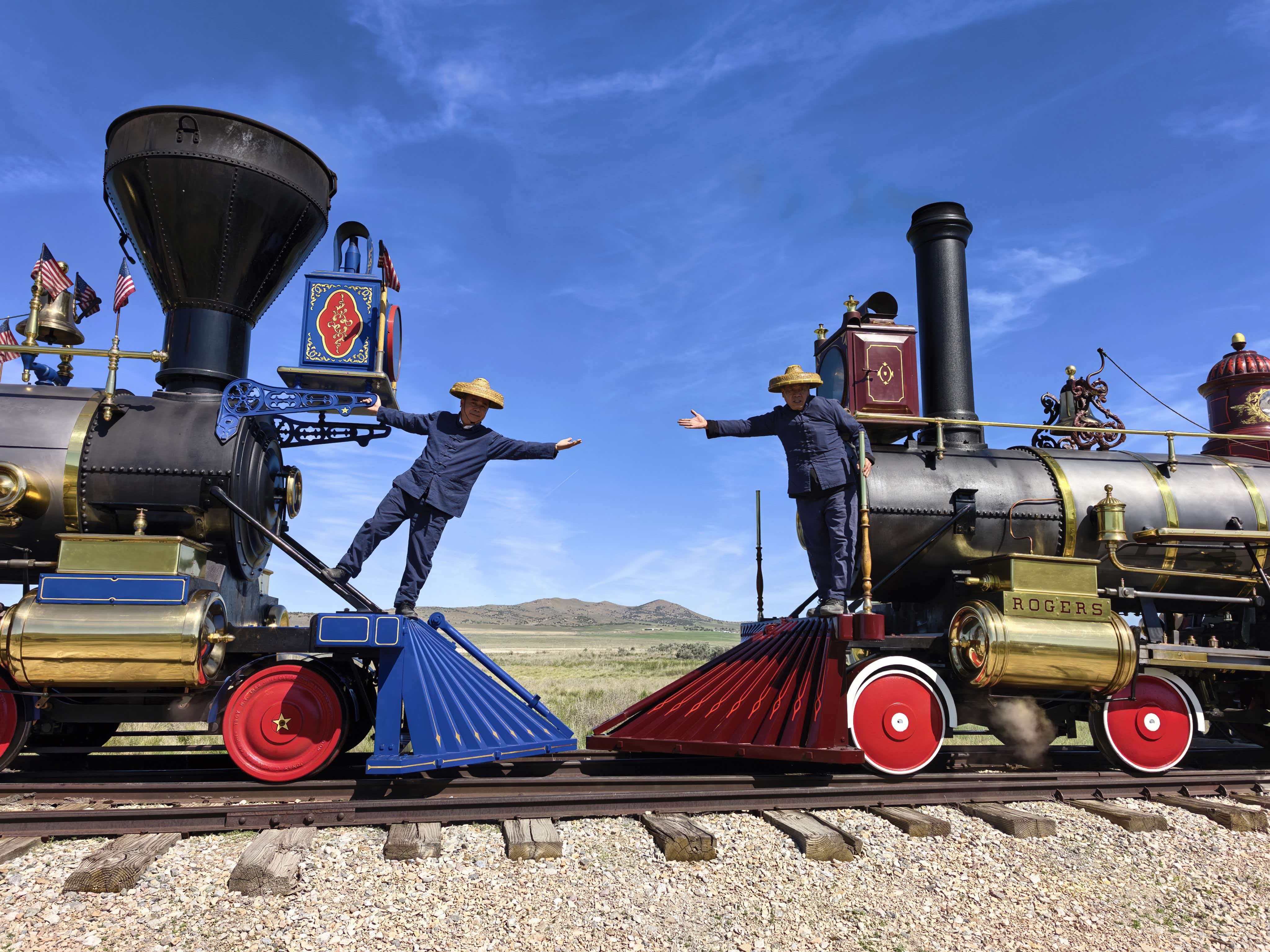
Professor Wu Xinxiong(left) is wearing traditional clothing of historical Chinese laborers, and on site he is realistically recreating scenes of the hard labor once endured by Chinese laborers in the past.
As the long railway stretches across east and west, the familiar hometown dialect carries remembrance for loyal souls. This year’s Golden Spike Festival used history to speak, commemorating the tremendous sacrifices and contributions of Chinese laborers who shed blood and sweat, while using the language of home to convey the deep emotions of overseas Chinese honoring their ancestors. By paying tribute in his native dialect, Professor Wu Xinxiong demonstrated the profound patriotism and cultural confidence of overseas Chinese communities, while helping the long-overlooked achievements of Chinese railroad workers once again gain the recognition and remembrance they deserve, ensuring that the spirit of the Chinese people continues to be passed down across mountains and oceans for generations to come.
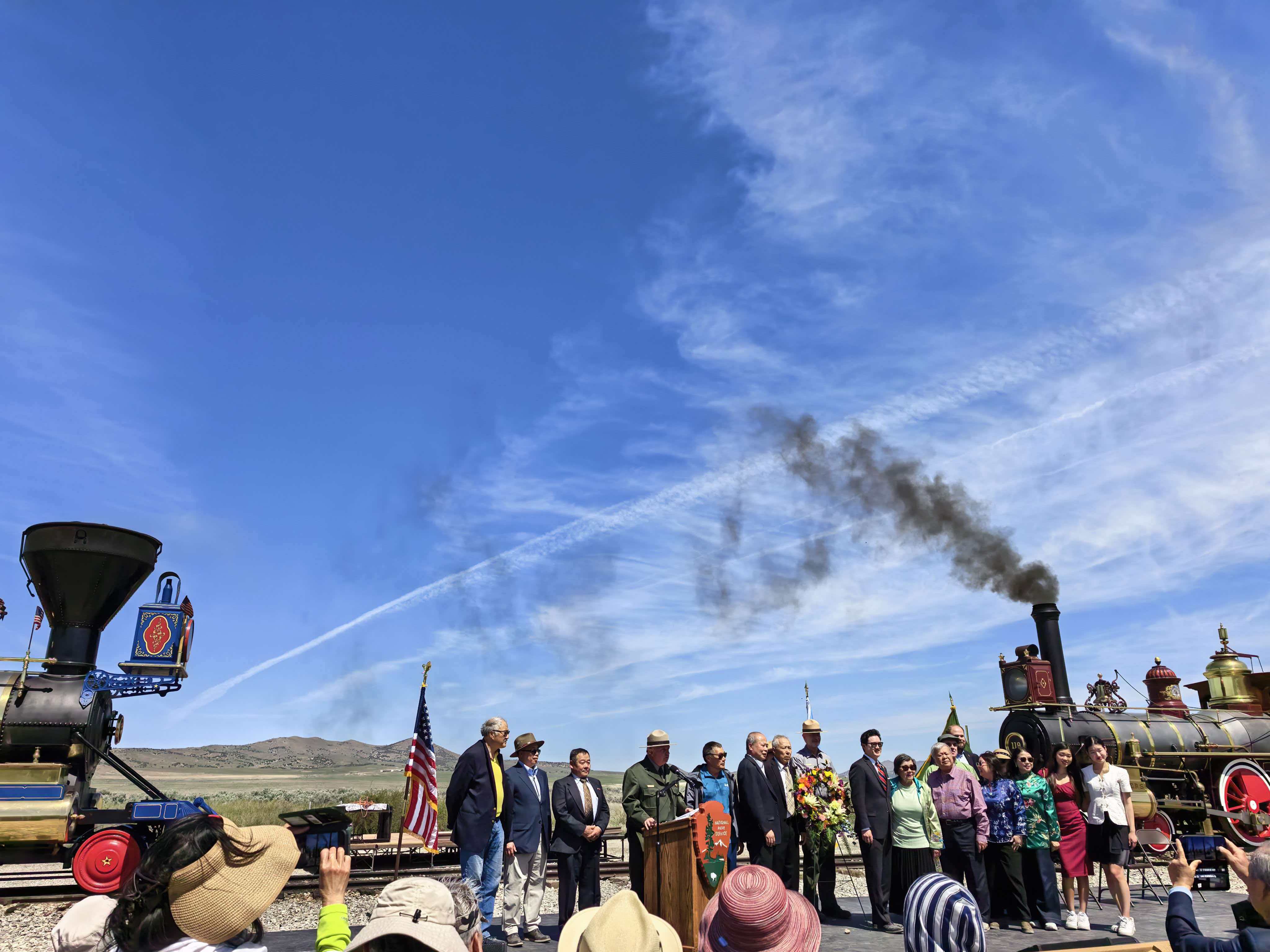
Group photo of some of the guests at the event site.