
[中文版本]
This year’s Valentine’s Day was especially meaningful for the students of the Zai Dao website. On that day, they visited Jiayuan Senior Center to celebrate the Lunar New Year with elderly Chinese Americans, spending a warm and unforgettable time together amid laughter and joy.
The “Spring Festival Visits to Chinese American Elders” has been a tradition that Zai Dao has upheld for five years. Each year, the students enter the community with performances, activities, and companionship, bringing New Year’s blessings to the elders. Through these repeated encounters, they also learn to care for others, to understand the passage of time, and to carry on their culture.
Early in the morning, the students arrived at Jiayuan Center. With the strong support of the staff, everyone worked together to decorate the venue, put up festive ornaments, and prepare materials for the event. The room soon overflowed with a rich holiday atmosphere. The program was hosted by two students, Doris Wang and Emily Jia. They first introduced the founding background and cultural mission of the Zai Dao website, then invited each participating student to come up one by one to introduce themselves and offer New Year greetings to the elders. Those heartfelt wishes filled the room with warmth and familiarity.
The students then presented a wonderful range of performances. Zheng Lin’s martial arts performance was crisp, spirited, and full of energy, winning round after round of applause. Li Sizhe’s guitar performance and singing were light and warm, and as the melody flowed through the room, the atmosphere became especially relaxed and cheerful. After that, the Zai Dao students gathered onstage once more and, accompanied by Sizhe’s guitar, sang “Happy New Year” together. The elders could not help but join in, singing along again and again. Song and laughter intertwined, making the whole space seem younger somehow.
After the performances came an interactive game session full of laughter. The riddle-guessing activity was hosted in turns by Liu Runyu, Du Leyao, and Tian Minkai. Other students busied themselves passing microphones and handing out prizes, and the atmosphere was lively and animated. The elders thought seriously, answered eagerly, and threw themselves into the game with a focus and enthusiasm no less than that of children in a classroom. The way they rushed to answer made you feel, very clearly, that their hearts were still young.
The handicraft portion created an even closer exchange between the students and the elders. Zai Dao had prepared paper-cutting materials, Year of the Horse designs, red lantern crafts, and a much-loved brush calligraphy station. Many of the elders were especially fond of calligraphy and eagerly picked up their brushes. “Write a fu (fortune) character for the New Year” quickly became one of the most popular activities. Before long, the tables were covered with bright red fu characters left out to dry. At Jiayuan Center, one 101-year-old gentleman wrote with force and elegance, while a 99-year-old grandmother remained bright-eyed and full of spirit. Like the others, they moved from booth to booth, trying different activities, chatting warmly with the students, and wearing joyful smiles.
Everyone sat together, making crafts while talking softly. The children were taught patiently, and the elders learned attentively. The elders told stories from the past, and the children listened with care. In exchanges like these, culture was passed on quietly; in companionship like this, affection flowed naturally.
At the same time, some of the students carried trays filled with candies and Chinese pastries, weaving through the crowd to place holiday treats into the elders’ hands. Those small sweets carried real thoughtfulness, making the holiday atmosphere all the more warm and tender.
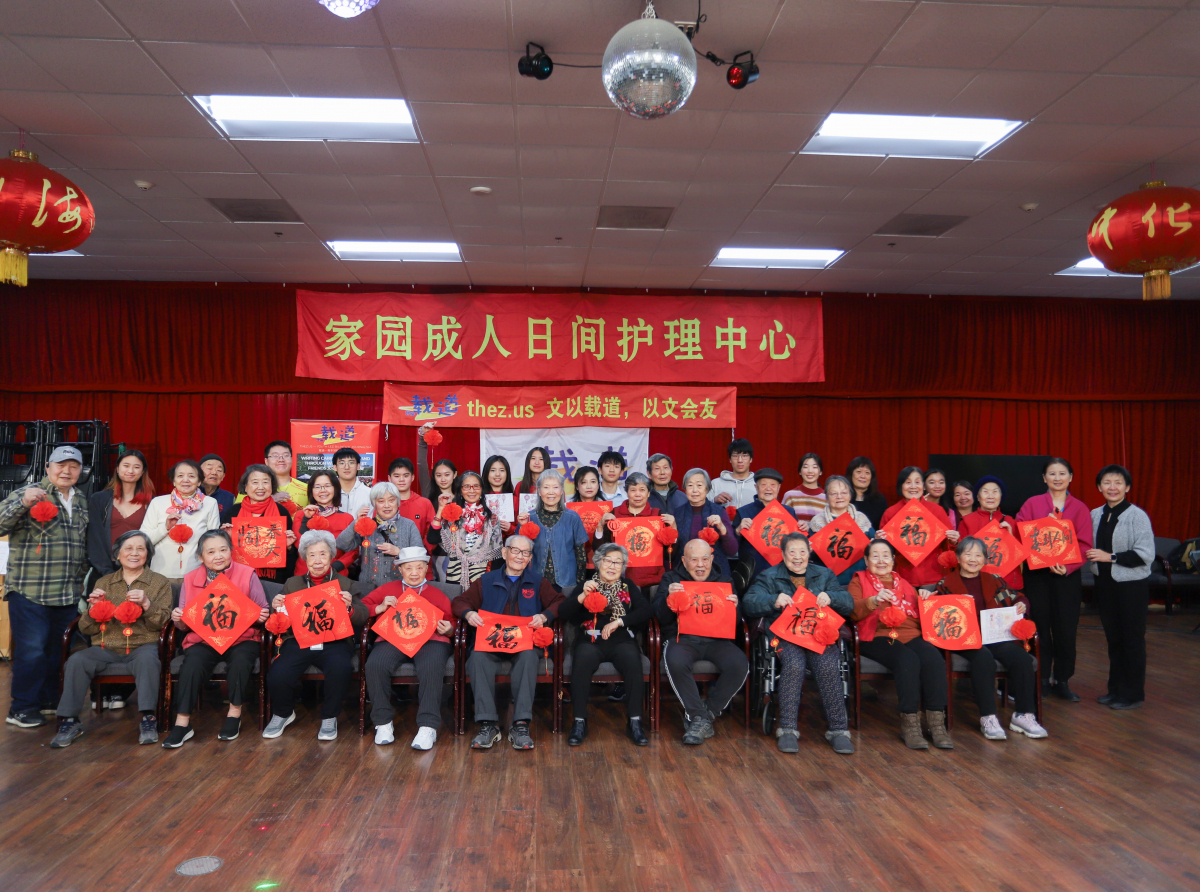
Before anyone quite realized it, the event was drawing to a close. The elders held the red lanterns they had made by hand and the freshly written fu characters they had just completed, and posed for photos with the students. Applause broke out again and again. The elders sincerely thanked the students for coming and for bringing such joy and warmth. Many took out their phones to take pictures with the students, saying they wanted to remember this beautiful moment. In truth, the experience was just as meaningful for the students. Respecting the old and caring for the young was no longer just a phrase from a textbook. Through each visit into the community and each genuine encounter, it became something vivid and deeply felt.
Five years of persistence may not seem like some grand, earth-shaking achievement, but it has carried the most grounded and lasting kind of warmth. And through these acts, the students of Zai Dao have quietly grown as well.
He Xiaohui, the head of Jiayuan Center, was deeply moved and said, “The Zai Dao students’ Spring Festival visits to elderly Chinese Americans are tremendously meaningful. I’m grateful to the teachers for bringing Chinese culture to Chinese American youth, and grateful that the children, in turn, transform what they have learned into warmth given back to elders in the community. This is not only the inheritance of culture, but also a connection of hearts. This kind of dedication and care will surely blossom and bear fruit in the hearts of both generations.”
During this special Chinese New Year season, love was not only flowers and greetings. It was companionship across generations, the continuation of culture, and the gentle yet steadfast bond between one generation and the next.